
Introduction
Adjustable school desks are not automatically better than fixed-height desks, and fixed furniture is not automatically more durable. The right decision depends on the student population, how rooms are allocated, who will manage adjustments, the required standard, maintenance capability, and total project cost.
The short answer: choose adjustable desk-chair sets when rooms serve mixed ages, cohorts change frequently, or the project cannot reliably allocate several fixed sizes. Choose fixed-height furniture when student size groups are stable, rooms can be assigned correctly, simplicity is a priority, and procurement can supply the right size in each room.
This comparison helps school owners, contractors, distributors, and tender teams make that decision using project conditions rather than marketing claims.
021. What “adjustable” and “fixed height” mean
A fixed-height desk or chair has one working or seat height. A project may still buy several fixed-size versions and distribute them by classroom. Fixed does not mean one universal size.
An adjustable product has two or more defined settings or a continuous adjustment range. School furniture commonly uses telescoping metal legs with bolted, pinned, or otherwise secured positions. The mechanism should be easy for authorized staff to set, resistant to unintended movement, and covered by the product's safety assessment.
The desk and chair must remain coordinated. Raising only the desk or only the chair can create an unsuitable relationship between seat height and work surface. For this reason, an adjustable set and its size chart are often easier to manage than unrelated adjustable products.
032. Decision summary
| Decision factor | Adjustable furniture | Fixed-height furniture |
|---|---|---|
| Student size range | Covers multiple defined settings when the range is appropriate | Requires correct size selection and allocation |
| Changing cohorts | Easier to reassign after adjustment | May require moving furniture between rooms |
| Initial product complexity | More components and control points | Simpler construction in many designs |
| Setup | Staff must set and verify heights | Correct size must be placed in the right room |
| Maintenance | Adjustment parts and fasteners need inspection | Fewer adjustment interfaces |
| Inventory | May reduce the number of size variants | Requires inventory by size group |
| Misuse risk | Incorrect setting or unsecured mechanism is possible | Incorrect size allocation is possible |
| Procurement value | Strong where flexibility is used | Strong where standardization is well managed |
This table is a starting point. Actual durability, stability, and price depend on the specific construction, not the category name.
043. When adjustable school desks are the better choice
Mixed-age or shared classrooms
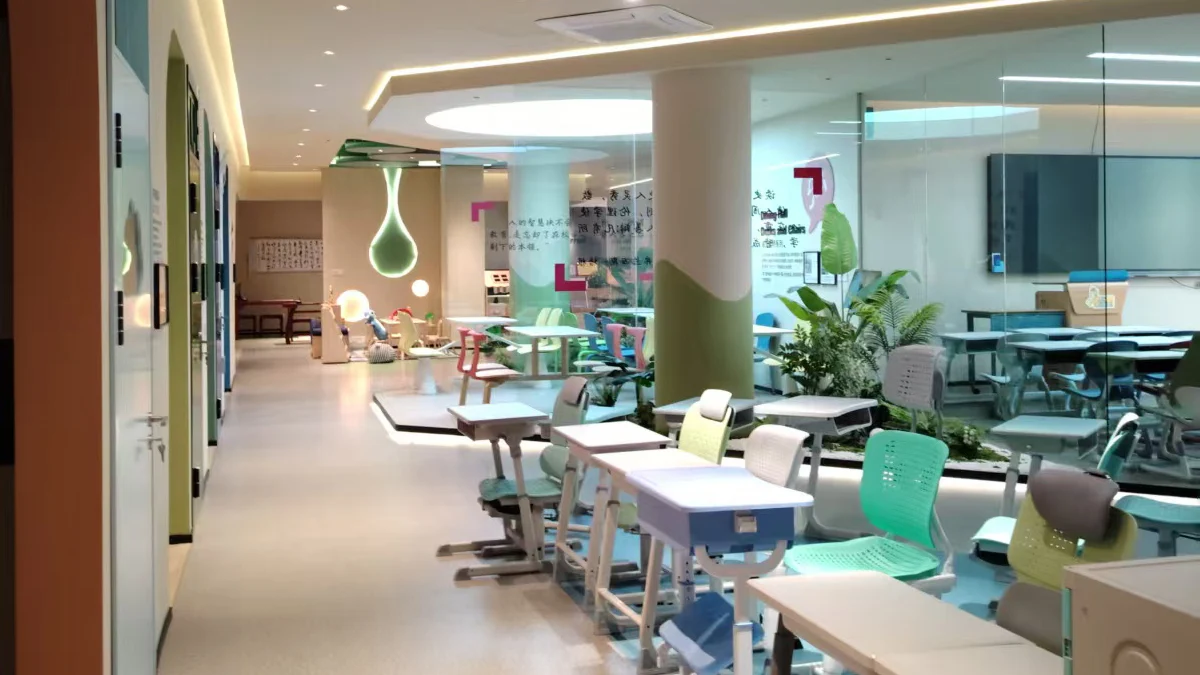
Training centers, community education spaces, laboratories, and multi-purpose rooms may host different age groups during one week. If the selected adjustment range covers those users, adjustable furniture allows the room to change without storing complete sets in several sizes.
Cohorts change from year to year
Student distribution changes. A room furnished for one size group this year may need another next year. Adjustable sets can protect layout flexibility if the facilities team is prepared to reset them.
The project has incomplete population data
Some new-school projects purchase furniture before final enrollment. Adjustment can reduce allocation risk, although it does not eliminate the need to define the intended user range. The product's minimum and maximum settings still have limits.
Distribution and replacement need simplification
A distributor may prefer one coordinated adjustable model over multiple nearly identical fixed SKUs. This can simplify catalog communication and spare holding, but the commercial benefit should be tested against additional product and mechanism cost.
Accessibility and individual accommodation
Adjustability may help accommodate a wider range of users, but it is not a complete accessibility solution. Wheelchair access, specialist seating, mobility equipment, clear routes, and individual requirements may need professional assessment and project-specific products.
KOHWA's KD-07 adjustable student desk and chair set is positioned for projects that want coordinated furniture for growing learners. Buyers should confirm the actual settings, locking method, dimensions, tabletop and shell materials, and required test evidence in the order specification.
054. When fixed-height furniture is the better choice
Student sizes and classroom assignments are stable
If a school knows its user population and can buy the correct fixed sizes, adjustment may add little operational value. Several fixed size groups can provide good fit without a mechanism on every item.
Operational simplicity is essential
Fixed-height products do not require staff to reset a mechanism. This can be valuable in examination rooms, tightly supervised projects, or locations where maintenance resources are limited.
A tender defines exact fixed dimensions
The buyer should quote the tender as written unless an approved alternative process exists. An adjustable range is not automatically compliant with a fixed-dimension clause. Submit deviations clearly rather than assuming “more flexible” means acceptable.
Budget is constrained and flexibility would not be used
Paying for adjustment only makes sense if it reduces another cost or risk. Fixed furniture may provide a better project value when size allocation, spares, and future cohorts are predictable. Compare construction, testing, packing, and lifetime management—not only the mechanism.
The environment increases fastener-management risk
Any product can loosen or wear, but adjustable interfaces introduce additional inspection points. In sites without a routine maintenance process, a simple design may be easier to keep in its intended condition.
065. Ergonomics: fit matters more than the label
An adjustable desk set at the wrong height is not ergonomic. A correctly sized fixed set can be entirely appropriate. Procurement should therefore focus on fit, the desk-chair relationship, and the ability to maintain that fit.
Useful observations during a mock-up include:
- Feet rest flat on the floor rather than dangling
- Seat depth does not press behind the knee
- Thighs are supported and the student can sit back
- Shoulders remain relaxed at the work surface
- The desk provides usable leg clearance
- The student can enter and leave without catching clothing or limbs
- The work surface supports normal books and devices without forcing a cramped posture
EN 1729-1 addresses functional dimensions for educational chairs and tables, while EN 1729-2 covers safety requirements and test methods. CEN-CENELEC currently identifies EN 1729-1:2015/AC:2016 and EN 1729-2:2023 in its school-standards guidance. Buyers should verify the adopted version and required certification in their country and tender.
Do not cite withdrawn ISO 5970 as if it were a current universal requirement. Standards change, national adoptions differ, and product reports have defined scopes.
076. Compare mechanisms, not just height ranges
Two adjustable desks with the same published range can perform differently. Review:
- Adjustment steps: Are the settings clearly defined and suitable for the intended users?
- Locking method: Does the mechanism resist unintended movement after correct assembly?
- Tools and time: Can trained staff reset a classroom efficiently?
- Alignment: Are both sides easy to set to the same height?
- Accessible gaps: Does adjustment create pinch, shear, or entrapment concerns?
- Fastener retention: Are parts controlled during use, adjustment, packing, and maintenance?
- Marking: Can staff see the selected setting without measuring every item?
- Stability: Is the product stable at each permitted setting?
- Finish coverage: Are telescoping areas protected appropriately from wear and corrosion?
- Replacement: Can mechanism parts be identified and supplied later?
Ask for an adjustment demonstration during sample approval. Have someone unfamiliar with the product use the instruction sheet; this reveals unclear steps before hundreds of units arrive.
087. Compare total cost of ownership
A fair comparison includes more than the purchase price.
Adjustable furniture costs may include: a higher component count, additional assembly, setting labor, staff training, mechanism inspection, and replacement fasteners. Potential savings may include fewer size variants, easier room reassignment, and reduced need to replace correctly functioning furniture solely because the user group changes.
Fixed furniture costs may include: purchasing and storing several size groups, room-to-room redistribution, size labels, and spare inventory by size. Potential savings may include simpler setup and fewer adjustable interfaces.
Build a five-step scenario:
- Estimate quantities by size today.
- Model likely cohort or room changes over the intended service period.
- Add receiving, assembly, setting, labeling, and maintenance labor.
- Estimate spares and the cost of mismatched inventory.
- Compare both options on the same packing, freight, testing, and delivery basis.
Avoid making an unsupported service-life claim. Actual life depends on construction, use, maintenance, environment, and repairability.
Mid-article CTA — Ask for a Product Comparison Send KOHWA the student age or size range, quantity, classroom type, destination, and required standard. Ask to compare a fixed desk-chair configuration with the KD-07 adjustable set on specifications, customization, packing, and quotation assumptions.
098. Sample testing and factory inspection priorities
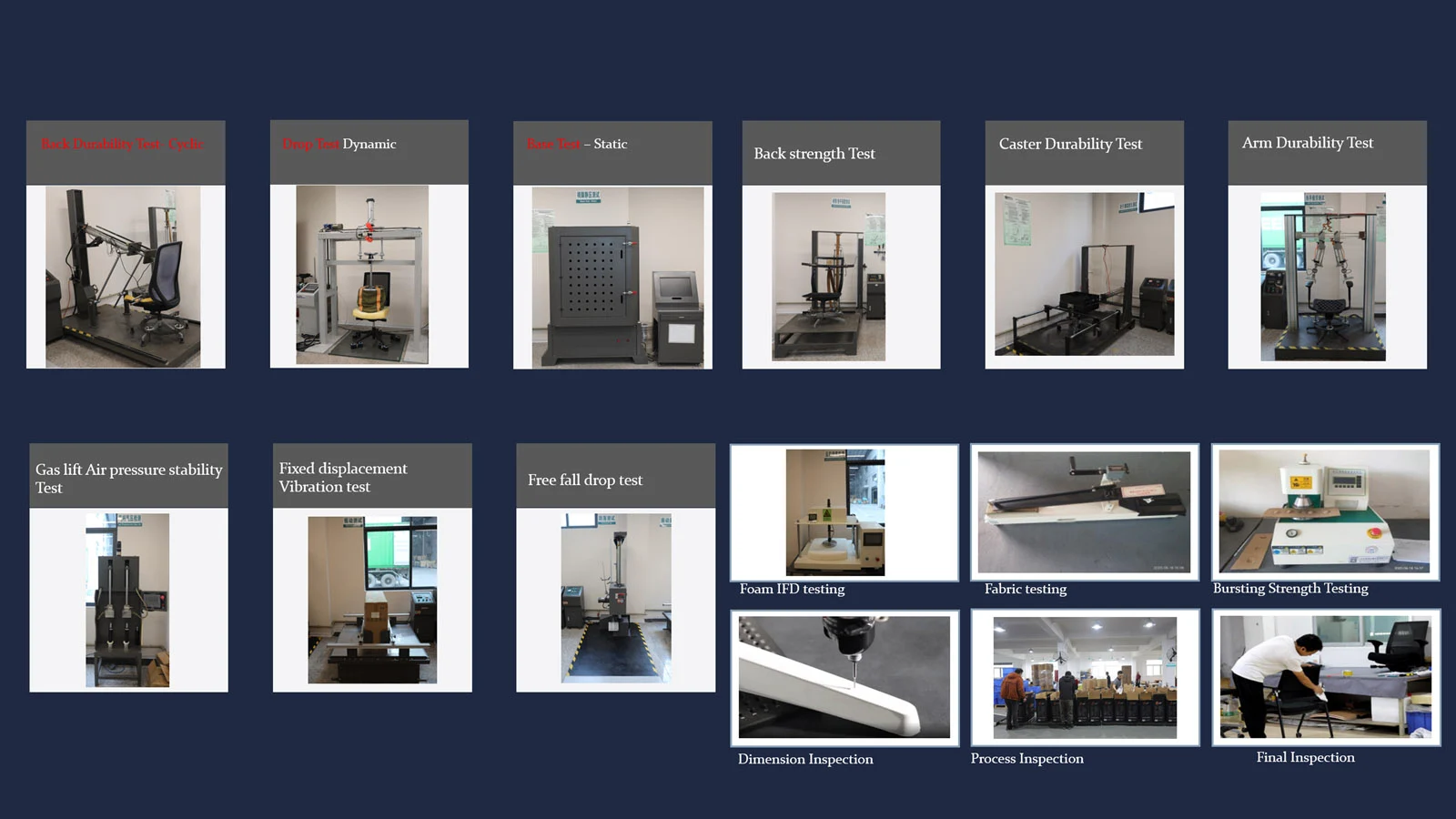
For fixed and adjustable products, sample review should check dimensions, stability, workmanship, edges, surfaces, assembly, and packaging. Adjustable models need additional checks at every permitted setting.
Suggested factory and shipment inspection points include:
- Measure a defined sample at minimum, intermediate, and maximum settings
- Operate the adjustment and confirm locking or fastener security
- Check that paired desk and chair markings correspond
- Assemble units using the supplied instructions and tools
- Inspect welds, coating, tabletop edges, shells, feet, and end caps
- Verify parts and fasteners against the packing list
- Confirm cartons identify model, color, and size or setting range
- Review the applicable test report against the actual production construction
If the order includes several colors or sizes, ensure the inspection sample represents each variant according to the agreed plan. A single perfect display unit is not a shipment inspection.
109. Installation preparation and classroom handover
The project team should decide who sets adjustable furniture: the factory, local installer, school facilities team, or teacher. Prepare a setting chart and room schedule. Use durable markings where appropriate, and retain the correct tools and spare fasteners at the site.
For fixed sizes, label rooms and cartons before loading so installers do not mix similar products. Confirm aisle widths and desk orientation against the approved floor plan. Inspect a completed reference classroom before rolling out the remaining rooms.
At handover, provide assembly instructions, cleaning guidance, adjustment instructions, parts identification, and a process for reporting shortages or transit damage. Photograph room condition and retain carton or batch references until acceptance is complete.
1110. A practical selection framework
Choose adjustable when most of these are true:
- The room serves a genuinely broad user range
- Cohorts or room uses change often
- The adjustment range is verified as suitable
- Staff can set and inspect the mechanism
- Reducing size variants creates real operational value
- The product is tested and stable across required settings
Choose fixed-height in appropriate size groups when most of these are true:
- User size data is reliable
- Rooms have stable assignments
- Multiple sizes can be purchased and distributed correctly
- Simplicity is more valuable than future reconfiguration
- Maintenance resources are limited
- The tender specifies fixed dimensions
Consider a hybrid approach when general classrooms have stable cohorts but shared rooms, learning support areas, libraries, or training spaces serve a wider range. A project does not have to force one solution into every room.
12FAQ
Are adjustable school desks better for posture?
They can support better fit when correctly adjusted, but adjustment alone does not guarantee good posture. The seat, back, work surface, leg clearance, and desk-chair relationship must suit the user, and the chosen setting must be maintained.
Are fixed-height desks only suitable for one age?
They are suitable for the user size group defined by their dimensions. A school can purchase several fixed sizes and allocate them by room or student population.
Do adjustable desks require more maintenance?
They normally introduce additional interfaces, fasteners, or locking parts to inspect. The actual maintenance burden depends on design, use, assembly quality, and whether staff change settings frequently.
Can one adjustable set fit every student?
Do not assume so. Every product has a defined range. Compare the technical drawing and permitted settings with the intended population and any applicable standard.
What should be included in an adjustable desk quotation?
Request the setting range, dimensions at each relevant position, materials, locking method, packed configuration, assembly instructions, testing scope, customization, spare parts, quantity, Incoterm, and lead-time assumptions.
Can KOHWA customize the color and branding?
KOHWA's current product information states that color, size, and branding customization are supported. Exact options, minimum quantities, artwork, samples, and effects on testing or lead time should be confirmed in the quotation.
13Conclusion
The best choice is the one the project can size, verify, install, and maintain correctly. Adjustable desks provide valuable flexibility for mixed or changing users. Fixed-height desks provide strong value where correct size groups and room allocations are known. A hybrid plan often produces a better outcome than a single campus-wide rule.
Final CTA — Send Your Requirements Tell KOHWA your student range, room types, quantities, destination, customization, required documents, and delivery target. Request a catalog, a sample discussion, or a side-by-side quotation for fixed and adjustable student furniture.
---
Editorial sources and review
This guide was prepared by the KOHWA Project Furniture Team and reviewed for product and export-procurement relevance. Standards must always be confirmed for the destination market and signed specification.
Frequently asked questions
Are adjustable school desks always more ergonomic?
No. Ergonomic fit depends on the available range, correct setting, compatible chair height and actual user dimensions. An incorrectly set adjustable product can still fit poorly.
Are fixed-height desks more durable?
Not automatically. Durability depends on materials, joints, frame design, workmanship, testing and use. Fixed designs may have fewer adjustment interfaces, but each product must be assessed on evidence.
Can a project combine fixed and adjustable furniture?
Yes. A hybrid strategy often works well: fixed sizes in stable classrooms and adjustable sets in shared, mixed-age or frequently reassigned rooms.
Ready to discuss your project?
Send the quantity, destination, student range and required documents. We will help clarify the next quotation step.
No fake urgency. Clear project information produces a clearer quote.