
Introduction
Choosing school desks and chairs for one classroom is mainly a product decision. Choosing them for a new campus, government tender, distributor program, or multi-school rollout is a project decision. The furniture must fit students, teaching methods, room plans, maintenance routines, shipping conditions, installation capacity, and the buyer's documentation requirements at the same time.
The short answer: start with student size and classroom use, then define measurable product specifications, required tests, quantity by room, packaging, and acceptance criteria before comparing prices. Request a sample or approved production sample, verify the supplier's documents, and calculate landed project cost rather than unit price alone.
This guide gives importers, contractors, school owners, and procurement teams a practical method for buying school desks and chairs in bulk without relying on vague descriptions such as “heavy duty” or “ergonomic.”
021. Begin with users, rooms, and teaching activities
A useful specification starts with the environment—not a catalog image. Collect the following information before asking for quotations:
- Student age or, preferably, relevant body-size data and required size groups
- Number of students per room and total number of rooms
- Individual, paired, lecture-style, examination, or collaborative layouts
- Required clear aisles, accessibility routes, and teacher circulation
- Frequency of room reconfiguration
- Need for book storage, bag hooks, modesty panels, or open under-desk space
- Cleaning methods, humidity, coastal exposure, and expected intensity of use
- Destination, delivery schedule, site access, and installation responsibility
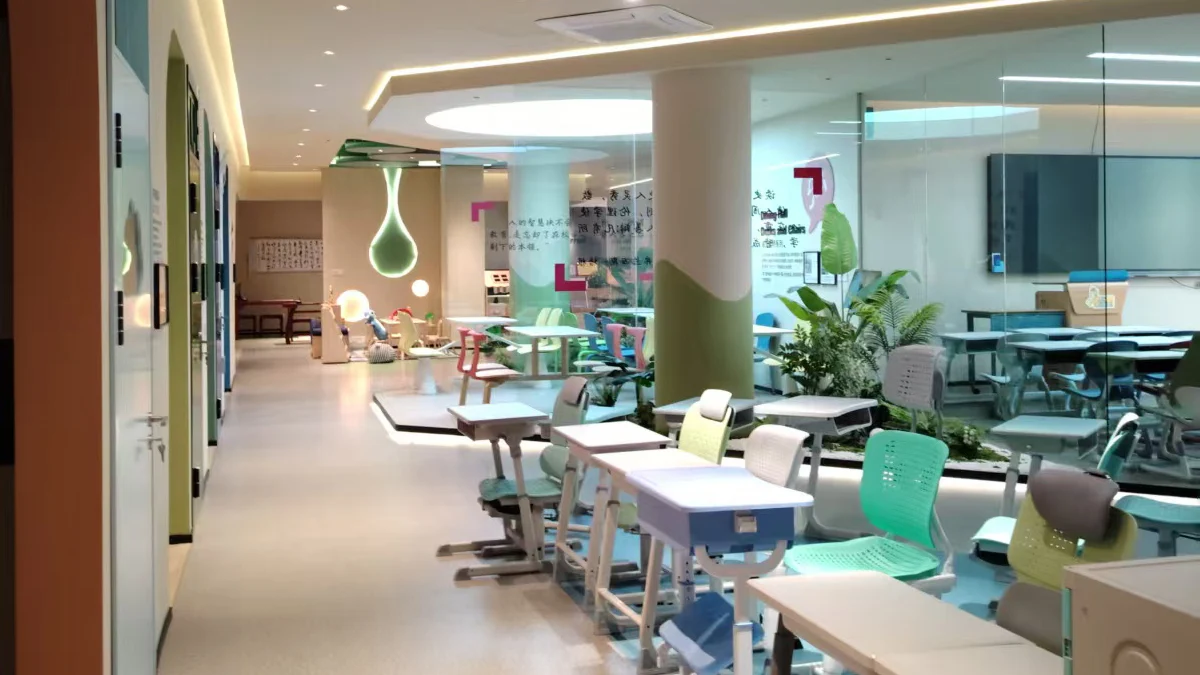
Two schools serving the same age range can require different furniture. A training center that resets rooms every day may prioritize low weight and stackability. A public-school tender may prioritize standardized sizes, replacement parts, test reports, and unambiguous acceptance criteria. A compact urban classroom may value a smaller footprint, while a campus project may prioritize coordinated finishes across several buildings.
Create a room schedule showing room name, student count, desk type, chair type, size, finish, and spare quantity. This simple document reduces quantity errors and gives every supplier the same basis for quotation.
032. Select dimensions from anthropometric needs, not grade labels alone
“Primary,” “middle school,” and “high school” are convenient labels, but student stature can vary significantly within a grade. A better fit check considers seat height, seat depth, desk height, leg clearance, and the relationship between chair and work surface.
A seated student should be able to place both feet on the floor, keep the thighs supported without excessive pressure behind the knees, and work without lifting the shoulders or bending sharply over the desk. For procurement, the desk and chair should be evaluated as a pair. A suitable chair combined with an incompatible table can still produce a poor working posture.
European projects often reference EN 1729. Part 1 addresses functional dimensions; Part 2 addresses safety requirements and test methods. The applicable edition, national adoption, test scope, and certificate validity should be confirmed for the destination market. ISO 5970 is sometimes mentioned online, but the ISO catalog identifies the 1979 edition as withdrawn, so it should not be copied into a new specification without expert review.
Practical sizing process:
- Obtain the buyer's required standard or tender size schedule.
- Review the student population and decide whether one, several fixed sizes, or an adjustable range is appropriate.
- Confirm desk height, chair seat height, seat depth, tabletop dimensions, and under-desk clearance on the technical drawing.
- Test the proposed desk-chair pairing with representative users or a mock classroom when possible.
- Mark size groups clearly on products, cartons, room schedules, and installation plans.
KOHWA's current catalog includes fixed and adjustable student furniture. For example, the KD-07 desk and chair set is designed around coordinated height adjustment. Exact ranges, tolerances, and market compliance should be confirmed in the signed specification rather than inferred from a marketing image.
043. Match the desk format to the learning model
The most suitable desk is the one that supports the classroom's normal activities with minimal friction.
Separate desk and chair: flexible for rows, pairs, and group clusters. Individual items can be replaced separately, but the buyer must control desk-chair size compatibility.
Coordinated desk and chair set: simplifies visual consistency and pairing. It is useful when a project wants one coordinated specification, particularly where both pieces share an adjustable size range.
Fixed-row or attached seating: can control alignment and save circulation space in some lecture settings, but installation, floor conditions, egress, and future reconfiguration need closer planning.
Desks with storage: keep books close to students but add material, weight, cleaning surfaces, and possible pinch or sharp-edge concerns. Confirm usable knee clearance and whether stored items obstruct posture.
Ask teachers or the project consultant to sketch the three most common room layouts. Then check whether the proposed furniture can move between them, whether chair legs collide with desk frames, and whether all required aisle widths remain clear.
054. Specify materials in measurable terms
Material names alone are not a complete specification. “Steel frame” does not state the tube profile, wall thickness, welding quality, pretreatment, coating, or corrosion expectation. “MDF top” does not state thickness, surface finish, edge treatment, substrate performance, or emissions requirements.
For a desk, define:
- Overall tabletop dimensions and thickness
- Substrate and surface material, such as MDF with HPL where appropriate
- Edge material, radius, bonding, and exposed-corner treatment
- Steel tube profile, dimensions, and specified thickness
- Welding and joint expectations
- Surface pretreatment and powder-coat finish
- Color reference, gloss tolerance, and approved sample
- Feet, adjusters, fasteners, bag hooks, and storage components
- Permitted dimensional and appearance tolerances
For a chair, define:
- Seat height, width, depth, and backrest geometry
- Shell material, such as moulded polypropylene where specified
- Frame material and finish
- Edge condition and accessible fasteners
- Stackability or floor-protection requirements
- Maximum stack recommendation if relevant
- Replaceable components and spare-part expectation
KOHWA's KD-01 student desk is currently described with an 18 mm MDF top with HPL and a powder-coated steel frame; the KC-03 chair uses a moulded PP seat and back with a powder-coated steel frame. These are starting points. A project quotation should attach a controlled specification sheet because dimensions, finish, color, branding, and packaging may change with customization.
065. Translate “durable” into tests and acceptance criteria
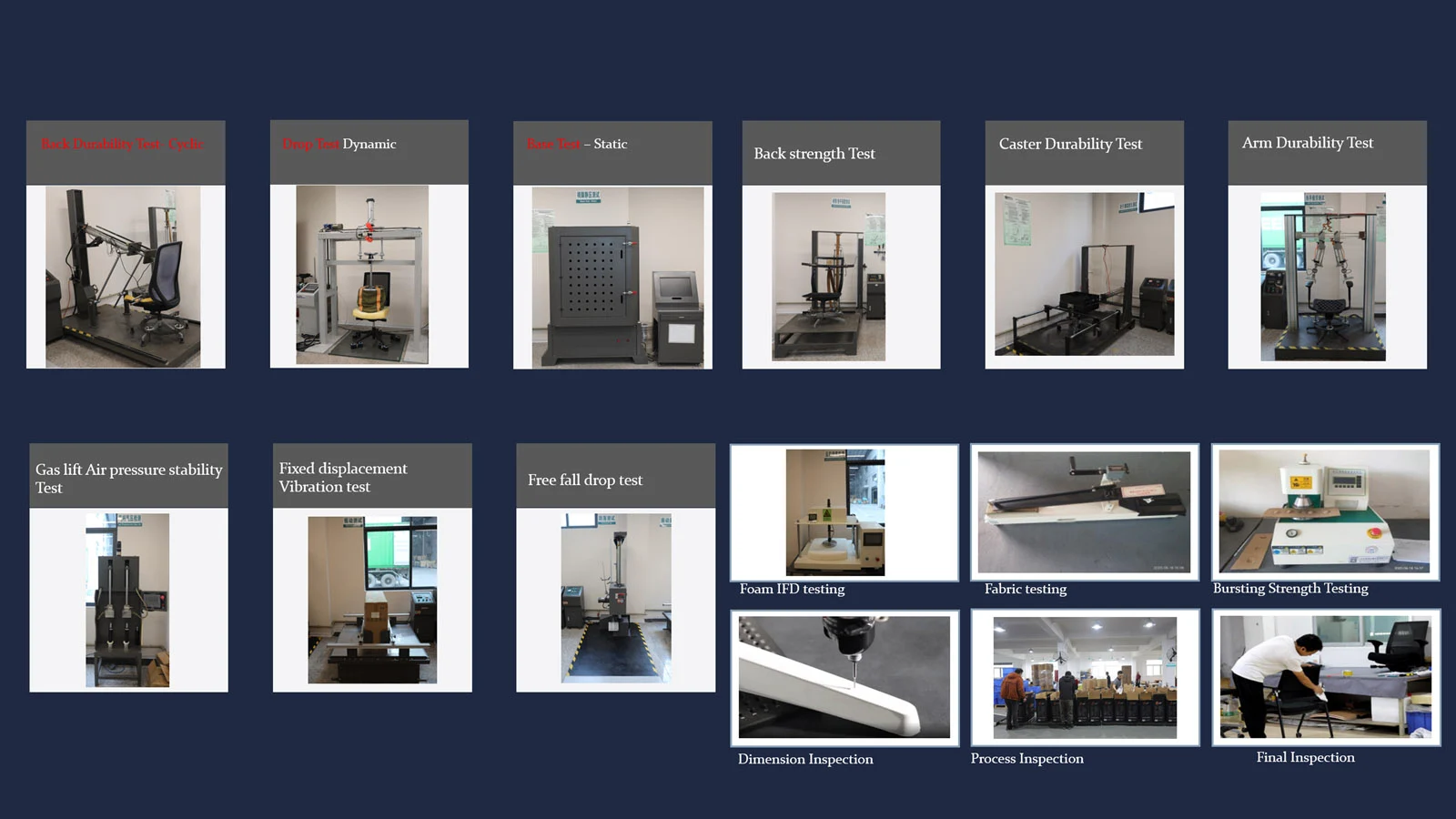
Durability cannot be verified from a product photo. The buyer should define which standard, test method, load level, cycle count, sampling rule, and laboratory status apply. The relevant program may consider stability, strength, durability, impact, accessible edges, pinch points, coating adhesion, corrosion, and material-specific requirements.
Do not request “all certificates” as a generic checkbox. Request documents that identify:
- Tested product and model
- Product construction covered by the report
- Referenced standard and edition
- Test clauses and results
- Laboratory identity and accreditation information
- Report number, issue date, and validity or change conditions
A report for a visually similar chair is not automatically evidence for the quoted model. Significant changes to tube thickness, plastic shell, fasteners, or construction may affect whether the report remains applicable.
Factory testing and production inspection should complement—not replace—independent testing when a tender or regulation requires it. Routine factory checks can verify dimensions, assembly, stability, surface appearance, adjustment function, fastener security, and packaging before shipment. The approved inspection checklist should state objective pass/fail criteria.
076. Approve a sample before mass production
A sample is most useful when it is treated as a controlled approval reference. Ask the supplier to identify whether it is a development sample, sales sample, pre-production sample, or production sample.
During sample review, check:
- Dimensions against the drawing
- Desk-chair ergonomic relationship
- Frame stability on a flat floor
- Adjustment operation and locking, if applicable
- Accessible edges, corners, gaps, and fasteners
- Weld consistency and surface preparation
- Color and gloss under consistent lighting
- Laminate and edge-banding adhesion
- Assembly instructions and required tools
- Carton protection and part identification
Record comments with photos and measurements. Once accepted, sign or otherwise control the approved sample, drawing, color chip, and packaging method. If the sample changes, issue a revision instead of relying on chat history.
087. Plan customization without losing control
OEM/ODM customization can help a distributor differentiate a range or help a school match its identity. Typical choices include color, size, tabletop finish, logo, carton mark, and branding. Each option also introduces a control point.
Use a product revision table listing every approved variation. For colors, provide a recognized color reference plus an approved physical sample because screens render colors differently. For logos, define artwork format, size, location, method, and color. For cartons, confirm product code, quantity, size mark, room or building code, destination mark, and language.
Before production, the supplier should confirm what customization changes the minimum order quantity, price, lead time, tooling, test applicability, spare parts, or packing density.
098. Calculate landed project cost, not only unit price
The lowest quoted unit price may not create the lowest installed cost. Compare quotations on the same Incoterm and specification, then include:
- Product price and customization charges
- Sample, tooling, and testing cost
- Export packaging and pallet requirements
- Inland transport and origin charges
- Ocean or air freight
- Insurance, import duty, tax, and destination handling
- Storage, site delivery, assembly, and waste removal
- Spare parts and replacement allowance
- Inspection and possible rework risk
Packing density matters for school furniture because transport can be a significant cost. Knock-down construction may improve container use, but it transfers assembly work to the destination. Evaluate assembly time, tool requirements, fastener control, instructions, and installer skill before selecting the packing method.
Mid-article CTA — Send Your Requirements Planning a classroom or campus project? Send KOHWA your quantity, destination, student age range, room schedule, target delivery date, and required standard. We can use those inputs to prepare a product and quotation discussion. Final specifications and compliance documents remain subject to written confirmation.
109. Prepare for production, inspection, and shipment
An order should not move into mass production with unresolved drawings or colors. A practical pre-production package includes the purchase order, signed specification, approved drawings, approved sample status, bill of materials where agreed, packaging instructions, inspection criteria, label files, delivery terms, and communication contacts.
Useful inspection stages include incoming-material checks, first-article review, in-process checks, assembly verification, packaging review, and pre-shipment inspection. The exact frequency and sample size should be agreed according to risk, quantity, buyer procedure, and applicable standard.
A shipment inspection may verify:
- Finished quantity and carton count
- Model, color, dimensions, and visible workmanship
- Stability and functional adjustment on sampled units
- Assembly and fastener completeness
- Labels, carton marks, barcode, and room coding
- Carton condition, internal protection, and packing method
- Container cleanliness and loading records
- Required reports and shipment documents
Photographs support the report but do not replace measurements or defined sampling. For large projects, the buyer may appoint an independent inspection company.
1110. Give suppliers enough information for an accurate quotation
At minimum, send:
- Product type or reference images
- Required dimensions or student size groups
- Quantity by model and color
- Materials and finish
- Required standards, reports, and tender clauses
- Custom logo and packaging needs
- Destination port or delivery address
- Target Incoterm
- Required delivery date
- Sample and inspection expectations
When some information is unknown, say so and request alternatives. A responsible supplier should identify assumptions rather than hide them in a single total price.
12FAQ
What is the best material for school desks?
There is no universal best material. A practical combination for many classrooms is a durable surface over a controlled wood-based substrate with a powder-coated steel frame, but the correct choice depends on cleaning, humidity, emissions rules, intended life, budget, and the destination standard. Specify the construction and required evidence rather than only a material name.
Should school desks be adjustable?
Adjustable desks are useful when the same furniture must serve a wide range of student sizes or changing cohorts. Fixed-height furniture may be more economical and simpler to manage when student sizes are known and multiple correct size groups can be purchased. Evaluate total cost, adjustment control, and room use.
How many spare desks and chairs should a project order?
There is no single correct percentage. Determine spares from project duration, site remoteness, likelihood of future matching, local repair capacity, and tender rules. Ask for separately packed spare components such as feet or fasteners where appropriate.
What should I check in a school furniture sample?
Check dimensions, desk-chair fit, stability, accessible edges, welds, coating, laminate and edge bonding, adjustment locks, assembly, fasteners, labels, and packaging. Record the accepted version with a signed drawing and photos.
Can a supplier quote from a classroom photo?
A supplier can give a preliminary range, but a reliable final quote requires dimensions, quantity, materials, finish, compliance requirements, packaging, destination, and delivery terms.
What information does KOHWA need for a quotation?
Send the product or model, quantity, destination, preferred dimensions and colors, student age or size range, customization, required documents, and target delivery time. KOHWA will confirm product options and commercial details in writing.
13Conclusion
Successful bulk school furniture procurement begins with measurable requirements. Define users and room layouts, pair desks and chairs correctly, specify materials and tolerances, verify relevant test evidence, approve a sample, and plan inspection, packing, shipping, and installation before comparing total cost. This process produces quotations that are easier to compare and reduces surprises at the school site.
Final CTA — Get a Project Quote Send KOHWA your room schedule, quantities, destination, size requirements, reference images, and target delivery date. Ask for a product catalog or request a tailored quotation for student desks, student chairs, or coordinated adjustable sets.
---
Editorial sources and review
This guide was prepared by the KOHWA Project Furniture Team and reviewed for product and export-procurement relevance. Standards must always be confirmed for the destination market and signed specification.
Frequently asked questions
What information should a school furniture RFQ include?
Include product type, quantities by room, student size range, dimensions, materials, colors, destination, Incoterm, required standards, packing, inspection and delivery date.
Should buyers request a sample before bulk production?
Yes. Approve a representative sample or signed production sample with drawings, finishes, labels and packing requirements before mass production.
Is the lowest unit price usually the lowest project cost?
No. Compare freight, duty, inspection, installation, replacement parts, damage risk and administrative costs as part of landed project cost.
Ready to discuss your project?
Send the quantity, destination, student range and required documents. We will help clarify the next quotation step.
No fake urgency. Clear project information produces a clearer quote.